
At Blossom, we want every child to develop confidence, curiosity and success in maths. Our maths curriculum is ambitious for all pupils and is designed to help children build secure knowledge, apply their understanding and see the value of maths in everyday life. We want children to become fluent in number, reason mathematically and solve problems with resilience.
Our Approach
As a mastery school, we teach maths in a way that helps children develop a deep and secure understanding before moving on to new learning. Our curriculum is carefully sequenced so that important concepts are introduced in small steps, revisited regularly and built on over time. This reflects current national thinking about strong foundations, clearer structure and high standards for all.
Wherever possible, children learn together as a class, with teaching adapted so that all pupils can access the same core mathematical ideas. This supports high expectations for every child, including pupils with SEND and those who need additional support or challenge.
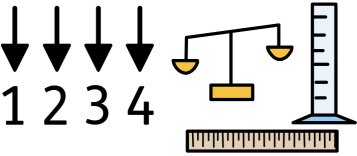
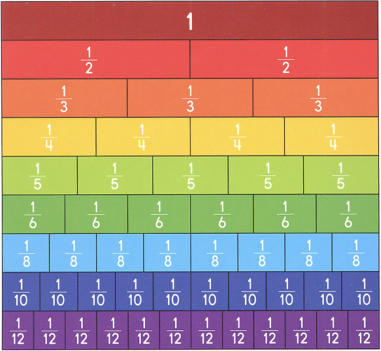
In maths lessons, pupils are encouraged to explain their thinking, use mathematical vocabulary and learn from mistakes. Teachers model new concepts clearly, use practical resources and visual representations, and provide regular opportunities for fluency, reasoning and problem solving. Pupils who need additional support receive carefully chosen scaffolds, while pupils who are ready for challenge are encouraged to think more deeply and apply their learning in different ways.


|
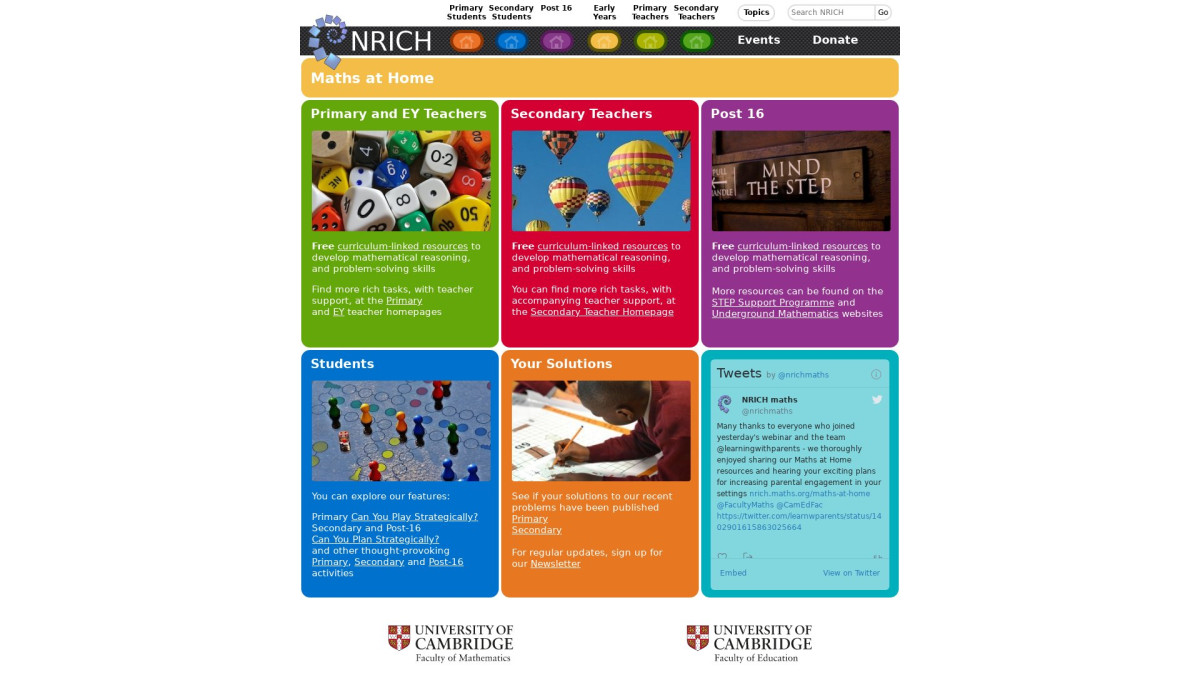
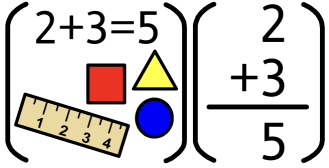
We have adopted the principles of CPA (Concrete → Pictorial → Abstract) in our maths lessons. This is a teaching approach where pupils move from: |
|
|
This progression helps pupils build a deep understanding, not just memorise procedures. |
Teachers check pupils’ understanding throughout lessons through careful questioning, discussion, observation, pupil explanations and review of work, using this information to adapt teaching and provide support or challenge where needed.
How Maths is Taught
- Early Years: Children develop early number skills through play, talk and real-life experiences. Vocabulary, pattern, shape and number sense are built in meaningful contexts.
- Key Stage 1: Maths is hands-on and visual. Children use equipment and images to understand ideas deeply, while practising key skills to build fluency.
- Key Stage 2: Children move towards more formal methods while continuing to develop recall, reasoning and problem solving. They learn to explain their thinking and apply maths across different contexts.
Across the school, we use White Rose Maths to support sequencing and planning, alongside NCETM (National Centre for Excellence in the Teaching of Mathematics) exemplars and guidance. All teachers adapt these resources to meet the needs and context of their classes.

The Impact
Our approach ensures that children:
- Become fluent and accurate in number and calculation.
- Can explain their thinking using mathematical language.
- Solve problems with confidence and resilience.
By the time they leave Blossom, pupils are well prepared for the next stage of their education and understand the importance of maths as a life skill.
Policies and Documents

Parent Support
Parents and carers can support maths at home by making it part of everyday life: counting, cooking, measuring, telling the time, handling money, spotting patterns and playing number games.
Short, regular practice of number facts and times tables can make a big difference, but the most important support is to talk positively about maths and encourage children to explain how they know.
The following links give further information and ideas for helping every pupil succeed in maths: